



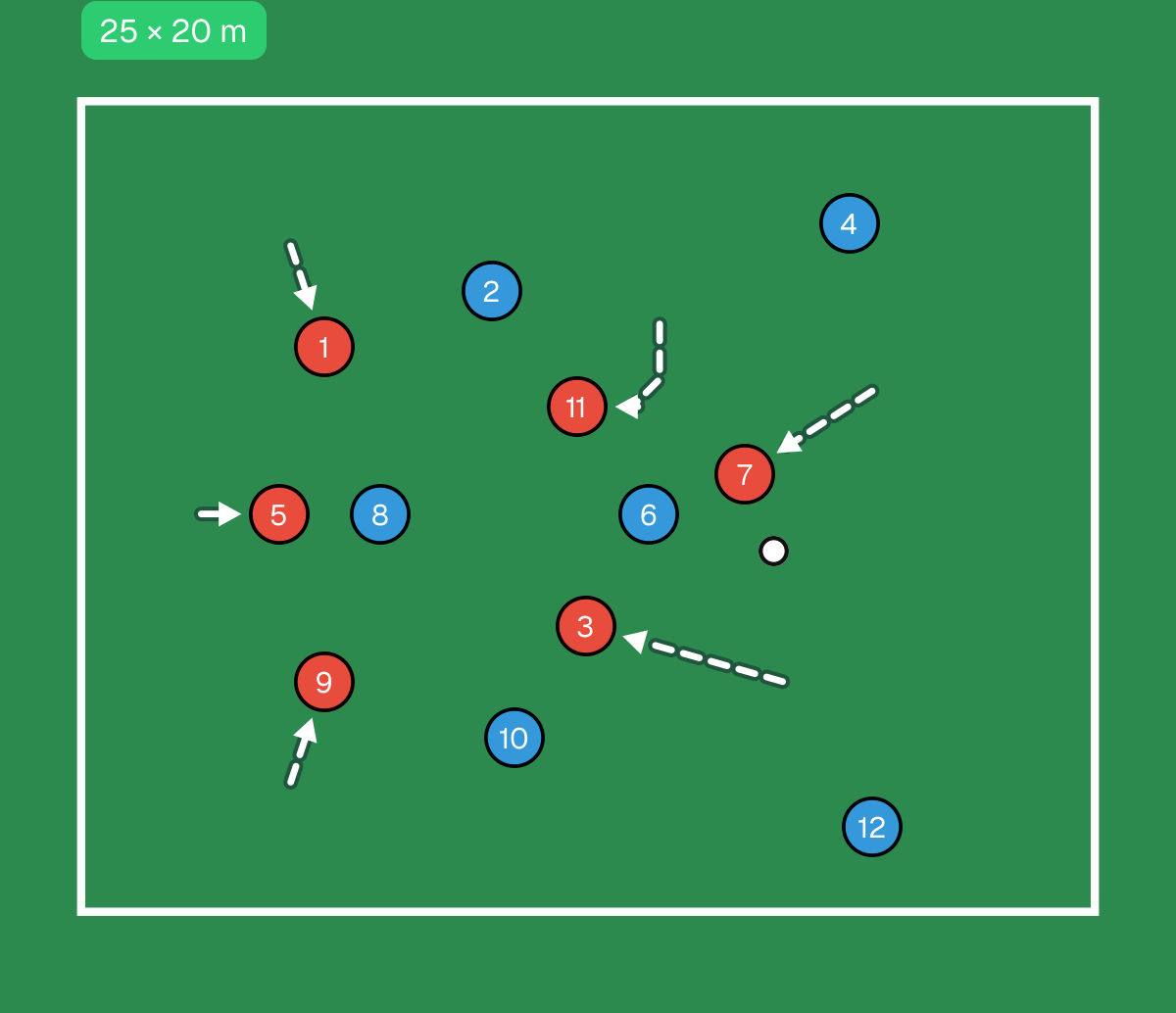
Gegenpressing (counterpressing) is the idea that the best moment to win the ball back is the instant after you lose it, while the opponent's first touch is still settling and their team shape is built for attacking rather than escaping pressure. Jürgen Klopp turned it into an identity at Dortmund and Liverpool, famously calling the counterpress the best playmaker in the world because it wins the ball closer to goal than any pass can.
The problem this drill attacks is the passive reflex most teams have after a turnover: heads drop, players jog back into shape, and the opponent breathes. By putting a loud five-second clock on every loss of possession, the exercise rewires that reflex into an immediate, collective hunt.
Objective
Condition an instant collective reaction to losing the ball, teach the three nearest players to smother the new ball carrier within five seconds, and organize everyone else into lane-cutting rest defense.
Setup
- Area
- 25x20m grid, with two mini goals on each end line for the directional progression
- Players
- 12: two teams of six (or 5v5 plus two neutrals)
- Equipment
- Cones for the grid, 2 sets of bibs, A large supply of balls with the coach, 4 mini goals (optional)
- Duration
- 15–20 minutes, split into short high-intensity rounds
How it works
- 1
Establish the possession game
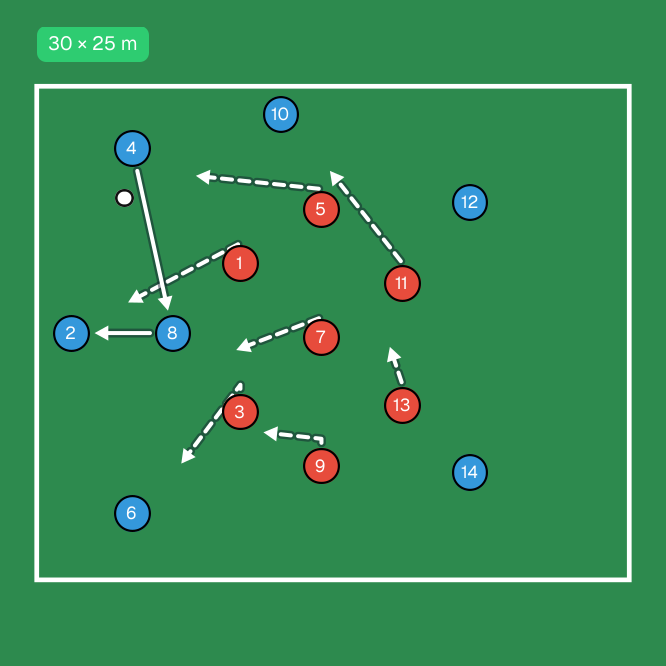
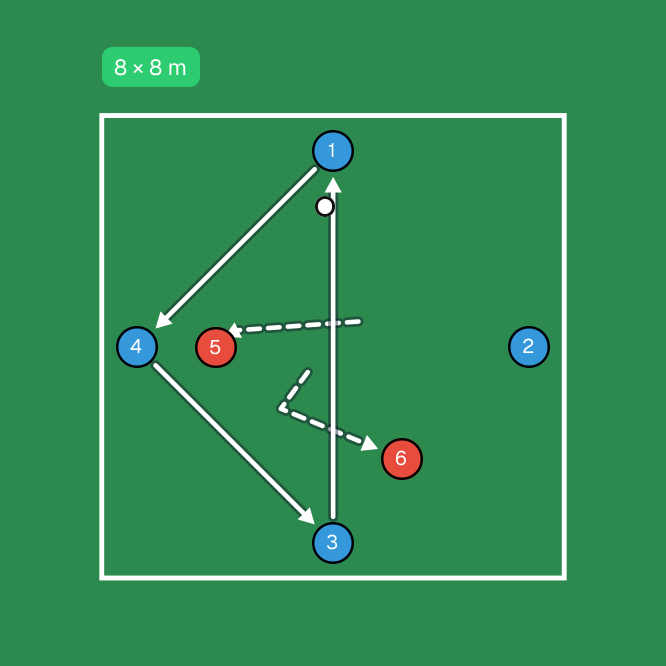
Play 6v6 in the 25x20m grid. The team in possession earns a point for ten connected passes. The coach feeds every new ball from the sideline so restarts are instant and intensity never drains away.
- 2
Add the five-second clock
Whenever a team loses the ball, the coach counts down from five out loud. If the losing team regains within the count, they immediately bank a point, making the reaction itself the scoring action.
- 3
Give the winners an escape route
The team that wins possession scores by completing three passes under the counterpress or by dribbling over an end line. Now both sides feel the transition: one hunting, one trying to break the press with the first two touches.
- 4
Assign counterpress roles
Freeze play early in the round and name the jobs: the nearest player attacks the ball carrier's touch, the next two cut the closest passing lanes with their runs, and the remaining three tuck in behind as rest defense covering the long escape.
- 5
Run it in intervals
Play three rounds of four minutes with 90 seconds of recovery. Counterpressing quality collapses when players are exhausted, and you want them practicing sharp reactions, not tired jogging.
Coaching points
Sprint to arrive as the opponent takes his first touch. Pressing the touch, not the man, is what forces the giveaway.
Approach on an arc that places your cover shadow over his easiest outlet, so the press removes a passing lane while it attacks the ball.
The second and third pressers hunt lanes, not the ball; three players chasing the same blade of grass is how counterpresses get played through.
Steer the escape toward the touchline or a crowded zone: the boundary is an extra defender.
Sell the mentality relentlessly: the turnover is a trigger to attack, and the first emotion after losing the ball should be aggression, never disappointment.
Variations
Neutrals for the possession side
Add two neutral players who always play with the team in possession. The 8v6 overload lengthens possession spells, which means more genuine turnovers to counterpress and a harder escape to shut down.
Counterpress to goal
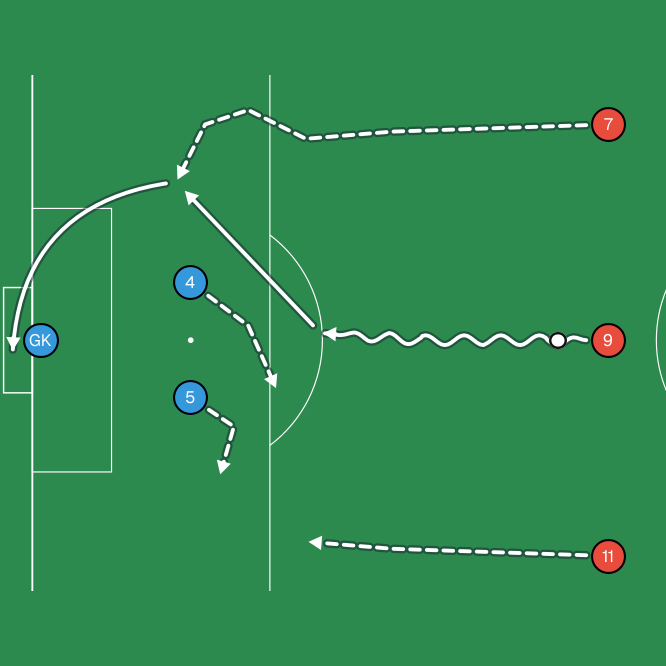
Move the game to half a pitch with a full-size goal and goalkeeper. A regain inside five seconds must be converted into a shot within ten, connecting the counterpress to its real payoff: chances near goal.
Build it in Coach Board
Recreate the turnover frame in Coach Board: freeze all twelve players at the moment possession is lost, then animate the three nearest reds converging on curved runs while the back three slide into rest defense. Playing that four-second clip on a loop at the tactics meeting explains gegenpressing faster than any speech.
Setting up your own drills? Use the football session planner.
Start 7-day free trial →No card required
Questions coaches ask
What is gegenpressing in simple terms?
It is pressing immediately after your own team loses the ball, instead of retreating into a defensive shape. The aim is to win possession back within a few seconds, while the opponent is disorganized and still oriented toward attacking.
How is counterpressing different from a high press?
A high press is applied when the opponent has settled possession, typically at their goal kicks or build-up, and is organized around a pressing structure. Counterpressing happens in the chaotic seconds after a turnover anywhere on the pitch, before either team has reset its shape.